You have found a car you like, and the drive-away price is $50,000.
Now comes the big financial question:
Should I pay cash, get a car loan, or lease the car?
There is no single answer that works for everyone.
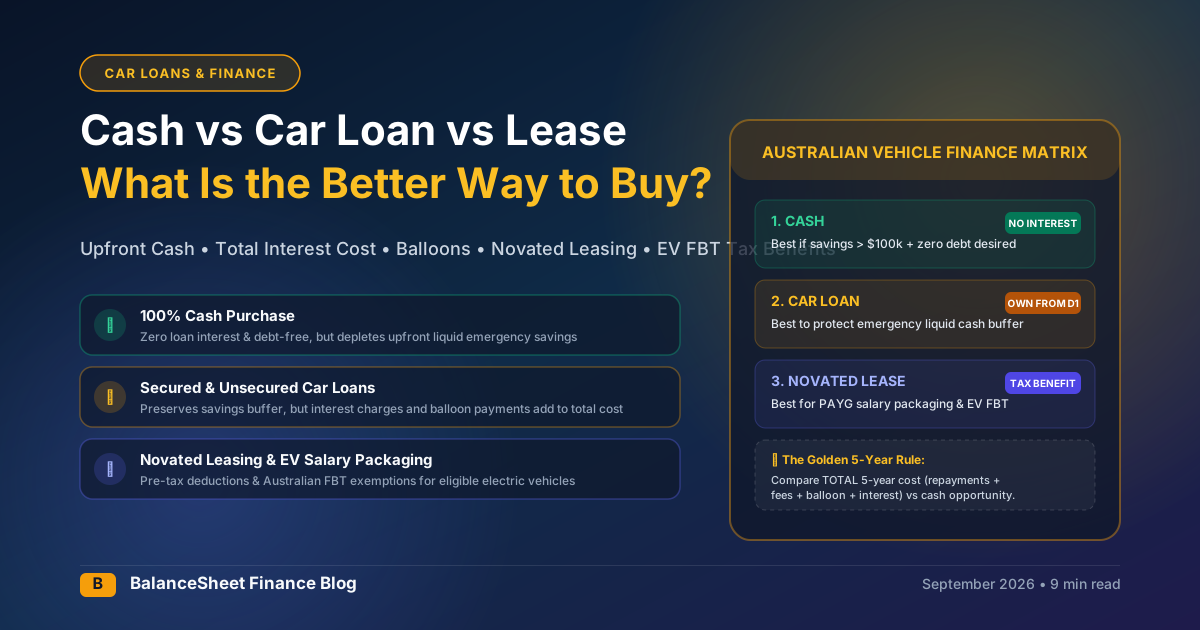
Paying cash is simple and avoids loan interest, but it takes a large amount out of your liquid savings. A car loan lets you keep your emergency cash available, but you pay interest and ongoing lender charges. A lease can reduce the amount of cash you need upfront, and a novated lease can have substantial tax advantages for Australian employees (particularly for eligible electric vehicles), but leases have more moving parts, residual amounts, and contract conditions.
This guide explains the differences in plain English so you can determine the best option for your personal financial situation.
This article provides general educational information only and does not constitute personal financial, tax, or credit advice. Interest rates, lender fees, tax treatment, and novated lease arrangements vary based on your personal circumstances and current Australian Taxation Office (ATO) legislation.
#1. The Three Main Vehicle Acquisition Choices
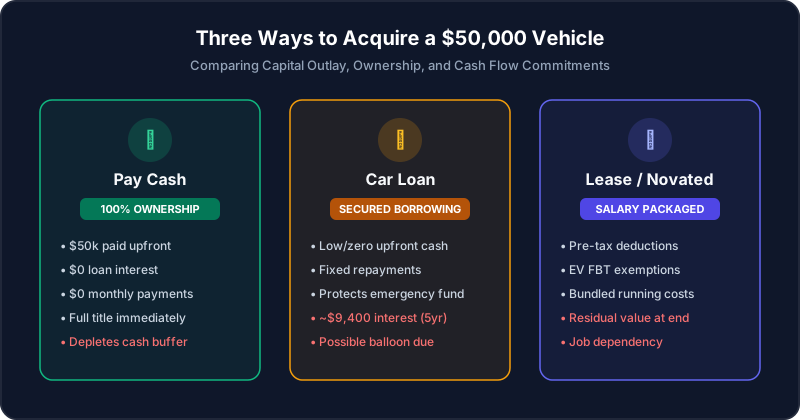
At a glance, here is how the three acquisition models compare:
| Feature | 💵 100% Cash | 🏦 Car Loan | 📄 Lease / Novated Lease |
|---|---|---|---|
| Large Upfront Payment | Yes ($50,000 immediately) | Usually low or zero deposit | Usually low or zero deposit |
| Regular Ongoing Payments | No ($0/month) | Yes (monthly repayments) | Yes (payroll deductions / lease payments) |
| Interest & Finance Costs | $0 loan interest | Yes (interest & lender fees) | Yes (finance/lease management costs) |
| Liquid Savings Remaining | Substantially reduced | Preserved in bank / offset | Preserved in bank / offset |
| Ownership Status | Full title immediately | You own it (subject to lender security) | Lessor holds title during term |
| Possible Amount at End | None | Possible (if balloon is selected) | Yes (residual value applies) |
| Employer Involvement | No | No | Yes (for Novated Leases) |
| Complexity Level | Low | Medium | Higher |
#2. Option 1 — Paying Cash
This is the most straightforward option. If the vehicle drive-away price is $50,000, you transfer $50,000 from your bank account and drive away debt-free.
#👍 Advantages of Paying Cash
- Zero Debt & Zero Interest: You never pay a dollar of lender interest or establishment fees.
- Immediate Full Ownership: The vehicle title is 100% in your name with no lender security or encumbrance on the PPSR (Personal Property Securities Register).
- Lower Monthly Budget Overhead: Your monthly cash flow has one less recurring debt obligation.
- Effortless Future Sale: Selling or trading in the car later requires no loan payouts or lender clearances.
#👎 Disadvantages of Paying Cash
The major drawback is the immediate depletion of liquid capital from your bank account.
Imagine you have:
- Total Liquid Savings: $70,000
- Vehicle Purchase (Cash): -$50,000
- Remaining Emergency Cash Buffer: $20,000
While you now own an asset, cars are depreciating assets that lose market value over time. Your cash is no longer sitting in high-interest savings or your mortgage offset account ready for unexpected emergencies or investment opportunities.
#The Critical Question Cash Buyers Often Overlook
Don't just ask: "Can I afford to pay $50,000 in cash?"
Always ask:
"How much liquid cash will I have left AFTER I pay $50,000?"
| Starting Savings | Cash Paid for Car | Liquid Savings Remaining | Emergency Buffer Assessment |
|---|---|---|---|
| $60,000 | $50,000 | $10,000 | ⚠️ High risk — thin emergency buffer |
| $70,000 | $50,000 | $20,000 | 🟡 Moderate buffer |
| $100,000 | $50,000 | $50,000 | 🟢 Healthy liquid buffer remains |
| $150,000+ | $50,000 | $100,000+ | 🟢 Strong liquidity preserved |
Someone with $150,000 in liquid cash is in a very different position from someone with $60,000, even though both have enough money to buy the exact same $50,000 vehicle.
#3. Option 2 — Using a Car Loan
Instead of parting with all your cash today, you borrow the purchase price from a bank, credit union, or specialist automotive lender and repay it over an agreed term (typically 3 to 7 years).

#Simplified Car Loan Example
- Vehicle Price: $50,000
- Amount Borrowed: $50,000
- Interest Rate: 7.00% p.a.
- Loan Term: 5 years (60 months)
- Balloon Payment: $0
- Estimated Repayment: ~$990 per month
- Total Amount Repaid: ~$59,400
- Total Interest Paid: ~$9,400 (illustrative)
#👍 Advantages of a Car Loan
- Preserves Cash Reserves: Keeps your hard-earned emergency fund intact in your bank or mortgage offset account.
- Predictable Budgeting: Fixed-rate car loans provide guaranteed, unvarying monthly payments.
- Direct Ownership: You purchase and register the vehicle in your own name from day one (subject to lender security).
- Flexible Early Repayments: Many lenders permit extra repayments or early loan payouts.
#👎 Disadvantages of a Car Loan
- Interest Charges: You pay thousands of dollars in cumulative interest over the term.
- Lender Fees: Application fees, monthly account-keeping fees, and potential early exit fees.
- Encumbrance: The lender holds a security interest over the car until the final dollar is repaid.
### Beware the "Monthly Payment" Trap & Balloon Payments
Dealerships frequently advertise loans with low monthly figures (e.g. $750/mo instead of $990/mo). Often, this lower payment is achieved by attaching a balloon payment (e.g. $15,000 due at month 60) or extending the term to 7 years.
A balloon payment does not make debt vanish — you still owe the lump sum on the final day of the loan. Always compare the TOTAL 5-year cost, not just the weekly or monthly figure.
#4. Option 3 — Leasing and Novated Leasing
Under a standard commercial lease, a leasing entity purchases and owns the vehicle, while you make ongoing lease payments for the right to use it. At the end of the term, a statutory residual value applies.
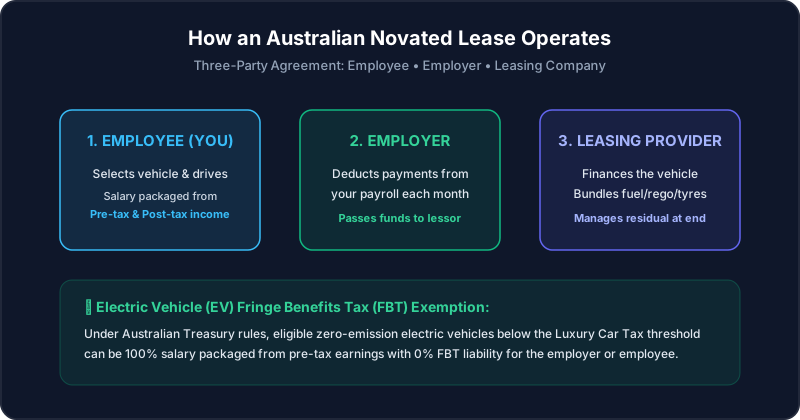
#How a Novated Lease Works in Australia
A Novated Lease is a three-way agreement between:
- You (the Employee)
- Your Employer
- The Novated Lease Provider / Financier
Your employer deducts the vehicle finance and bundled running expenses (fuel/charging, registration, comprehensive insurance, scheduled servicing, and tyres) directly from your salary before and after tax via payroll salary packaging.
#⚡ Electric Vehicles (EVs) and the Australian FBT Exemption
Under current Australian Treasury and ATO rules, eligible zero or low emission vehicles (battery electric vehicles and eligible plug-in hybrids) below the Luxury Car Tax (LCT) fuel-efficient threshold are exempt from Fringe Benefits Tax (FBT) when packaged under a novated lease.
This allows eligible employees to pay for 100% of the vehicle finance and running costs from pre-tax salary, creating substantial income tax and GST savings compared to a conventional personal car loan.
FBT Exempt Does Not Mean Free: Even with tax savings, you are still responsible for paying for the vehicle and its residual value. Always obtain a comprehensive after-tax quote and compare total outlays against paying cash or getting a competitive car loan.
#5. Summary Matrix: Cash vs. Car Loan vs. Novated Lease
| Evaluation Criterion | 💵 Paying Cash | 🏦 Standard Car Loan | ⚡ Novated Lease (EV / ICE) |
|---|---|---|---|
| Initial Upfront Cost | Full purchase price ($50k) | $0 to small deposit | $0 deposit |
| Total Interest / Financing Paid | $0 | Full loan interest (~$9k+) | Finance charges built into lease |
| Impact on Emergency Buffer | Heavy initial drain | Low impact | Low impact |
| Tax Deductibility (Personal Use) | None | None | Pre-tax packaging (Significant for EVs) |
| Running Costs Handling | Paid out of pocket after-tax | Paid out of pocket after-tax | Can be packaged with pre-tax dollars |
| End-of-Term Commitment | None (You own the car) | None (unless balloon agreed) | Residual payout / trade-in required |
| Best Suited For | High liquid cash savings ($100k+) | Wanting ownership + cash buffer | PAYG employees, especially buying EVs |
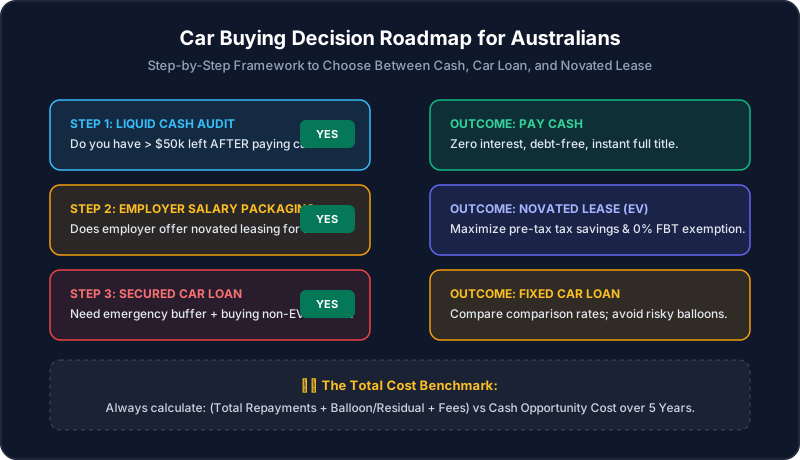
#6. Step-by-Step Decision Roadmap
#Questions to Ask Before Signing Any Agreement
#For a Car Loan:
- [ ] What is the headline interest rate and the Comparison Rate?
- [ ] Are there upfront establishment fees or ongoing monthly account fees?
- [ ] Is there a balloon payment at the end? If so, what is the exact dollar figure?
- [ ] Can I make fee-free additional repayments to pay the loan off early?
- [ ] What is the exact total amount payable over the full loan duration?
#For a Novated Lease:
- [ ] What is the exact lease term and monthly deduction breakdown (pre-tax vs. post-tax)?
- [ ] What running expenses (insurance, maintenance, tyres) are included in the quote budget?
- [ ] What is the mandatory residual value at the conclusion of the lease?
- [ ] What happens if I change employers or face a redundancy during the lease term?
- [ ] What is the net take-home pay reduction over the entire lease duration?
#7. The Golden 5-Year Rule
Before committing to any vehicle purchase, populate this simple 5-year cost sheet:
| Cost Component | 💵 Cash | 🏦 Car Loan | 📄 Lease / Novated |
|---|---|---|---|
| Drive-Away Purchase Price | $50,000 | $50,000 | $50,000 |
| Upfront Outlay | $50,000 | $0 - $5,000 | $0 |
| Total Regular Payments (5 Years) | $0 | ~$59,400 | Quote deduction total |
| Lender & Management Fees | $0 | ~$500 | Included in quote |
| End Balloon / Residual Payment | $0 | $0 (or balloon) | Mandatory residual |
| Tax Savings (if Novated) | $0 | $0 | - (Tax benefits deducted) |
| Estimated Net 5-Year Outlay | $50,000 | ~$59,900 | Total Net Cost |
Once you see the all-inclusive 5-year numbers side by side, making the right financial choice for your household is simple and clear.
#Useful Australian Government Resources
- ASIC Moneysmart — Car Loans & Personal Loans
- Australian Taxation Office (ATO) — Salary Packaging & Electric Vehicle FBT
Disclaimer: This article provides general educational information only. It does not take into account your objectives, financial situation, tax position, or personal needs. Consider consulting a licensed financial planner or tax professional before entering into credit or leasing agreements.