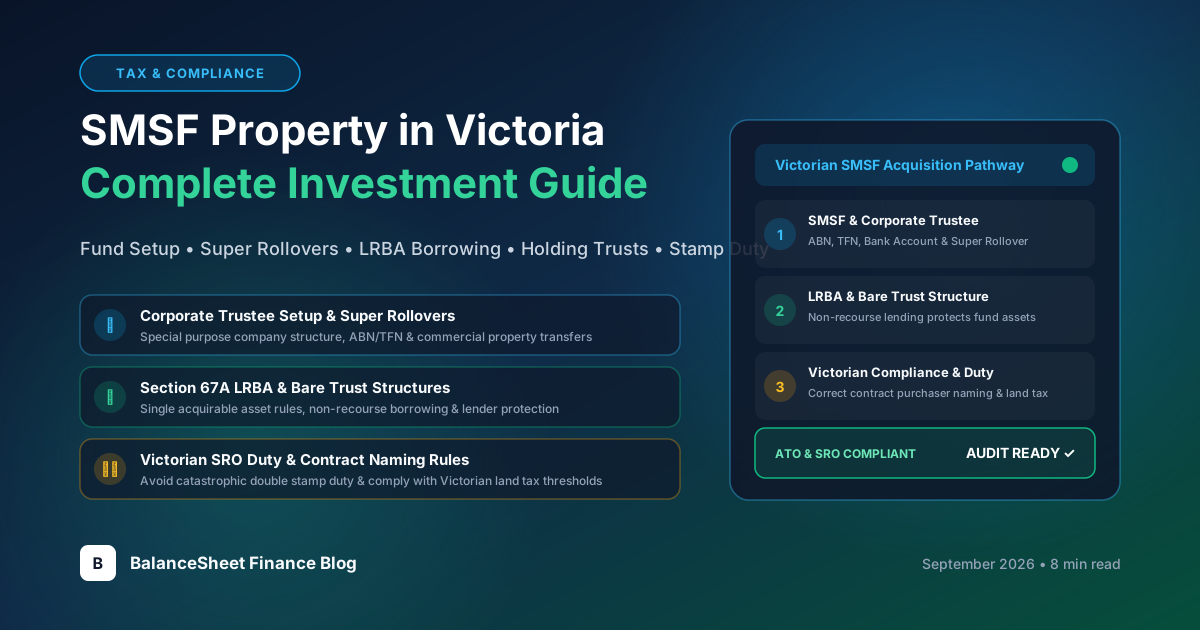
Buying an investment property through a Self-Managed Super Fund (SMSF) can be a powerful way to leverage your accumulated superannuation to invest directly in Australian residential or commercial real estate for retirement wealth creation.
However, buying through an SMSF is fundamentally different from buying property in your own personal name. The legal structures, lending rules, taxation obligations, and State Revenue Office (SRO) Victoria requirements are rigorous and tightly policed.
This beginner-friendly guide explains the complete structure, what must be established prior to making an offer, how superannuation balances are rolled over, and what happens when the fund requires a specialized Limited Recourse Borrowing Arrangement (LRBA).
This article provides general educational information only and does not constitute financial, legal, tax, superannuation, or credit advice. Superannuation law (SIS Act) and Victorian property regulations are complex. Always consult a qualified SMSF specialist accountant, licensed financial planner, and Victorian property solicitor before establishing a fund or signing a Contract of Sale.
#1. Buying Personally vs. Buying Through an SMSF
The most important starting point is understanding ownership and the legal boundary between personal wealth and superannuation assets:
| Aspect | Buying in Your Personal Name | Buying Through an SMSF |
|---|---|---|
| Legal Ownership | You personally hold the title or ownership structure | The property is held on trust exclusively for the SMSF |
| Source of Deposit | Personal cash savings or personal home equity | SMSF cash accumulated via super rollovers & contributions |
| Rental Income | Taxed in your personal individual tax return | Deposited directly into the SMSF bank account (15% tax / 0% pension) |
| Operating Expenses | Claimed as individual deductions against your income | Paid strictly from the SMSF bank account |
| Lending Products | Standard residential investor / owner-occupier loans | Specialized Limited Recourse Borrowing Arrangements (LRBA) |
| Personal Use | Complete freedom to live in, rent, or renovate | Strictly prohibited — zero personal or family use permitted |
| Capital Gains Tax | Personal CGT discount (50% if held > 12 months) | 10% effective CGT in accumulation, 0% in pension phase |
The Sole Purpose Test: An SMSF property is legally held solely to provide retirement benefits to members. It is not personal property, and members or their relatives cannot reside in or rent residential SMSF property under any circumstances.
#2. What Is an SMSF?
An SMSF is a private superannuation fund regulated by the Australian Taxation Office (ATO). Unlike retail or industry super funds (such as AustralianSuper or Hostplus), the members of an SMSF act as trustees or directors of a corporate trustee.
This gives members direct control over investment decisions, including:
- Cash accounts and term deposits
- Australian and international shares (ASX)
- Commercial real estate (e.g. offices, warehouses, medical suites)
- Residential investment property
Remember: Rolling over money into an SMSF does not make it personal cash. The funds remain locked in the superannuation system until members satisfy a condition of release (such as reaching preservation age and retiring).
#3. Understanding the Basic SMSF Structure
A standard, best-practice SMSF structure consists of:
- Members: The individuals whose retirement savings are pooled (e.g., John & Mary Smith).
- Corporate Trustee: A dedicated proprietary limited company (e.g., Smith Super Trustee Pty Ltd) where all fund members serve as directors.
- The SMSF: The superannuation trust entity itself (e.g., Smith Family Super Fund).
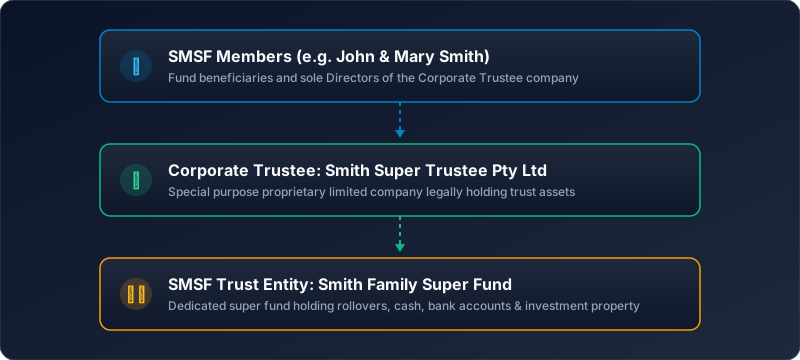
While individual trustees are legally permissible, major Australian lenders and SMSF specialists strongly recommend a corporate trustee for liability protection, streamlined asset succession, and LRBA loan eligibility.
#4. What Needs to Happen Before Buying Property?
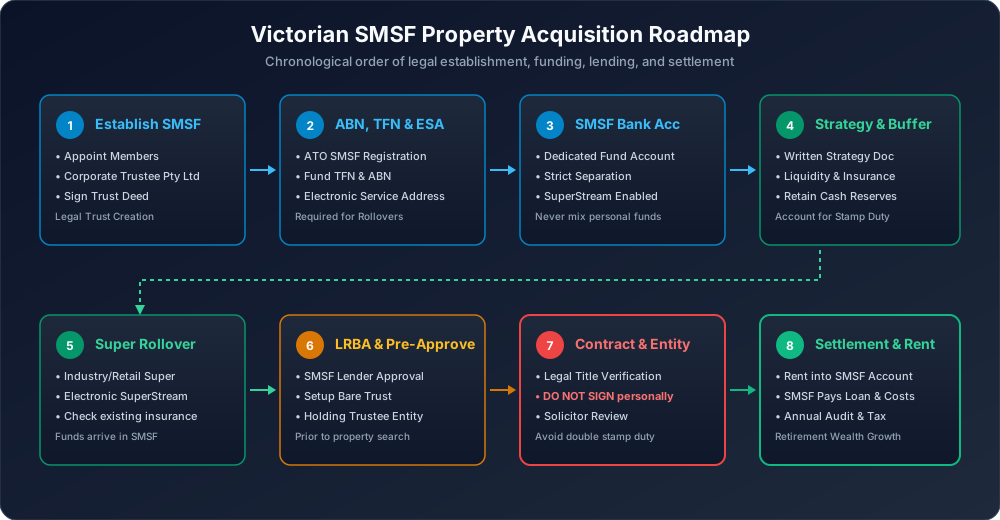
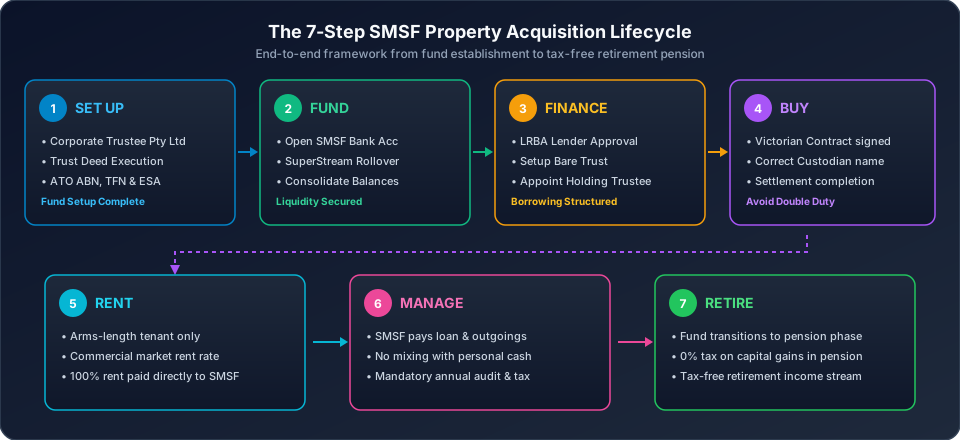
Acquiring a property through an SMSF requires methodical preparation. Here is the visual step-by-step roadmap:
#5. Step 1: Establish the SMSF
Before engaging with real estate agents or viewing properties, the SMSF must be legally established:
- Appoint the fund members.
- Incorporate a dedicated corporate trustee company with ASIC.
- Draft and execute a comprehensive SMSF Trust Deed.
- Sign trustee declarations acknowledging regulatory responsibilities.
#6. Step 2: Obtain Fund ABN, TFN & ESA
Once established, the fund registers with the Australian Taxation Office (ATO):
- Fund ABN: Unique identifier for the superannuation trust.
- Fund TFN: For annual fund tax returns.
- Electronic Service Address (ESA): A digital address (e.g., via SuperStream provider) enabling seamless electronic rollovers from standard super funds.
#7. Step 3: Open a Dedicated SMSF Bank Account
The SMSF requires an independent bank account in the name of the corporate trustee as trustee for the SMSF (e.g., Smith Super Trustee Pty Ltd ATF Smith Family Super Fund).
This account handles all incoming and outgoing financial flows:
- Incoming super rollovers from industry/retail funds
- Mandatory Superannuation Guarantee (SG) employer contributions
- Voluntary concessional and non-concessional contributions
- Gross rental income from tenants
- All property maintenance, council rates, insurance, and loan repayments
Zero Commingling: Never deposit personal money into the SMSF bank account without proper contribution documentation, and never draw SMSF funds for personal use.
#8. Step 4: Prepare an Investment Strategy & Liquidity Plan
Under superannuation law, trustees must formulate and regularly review a written Investment Strategy. This document outlines:
- Risk vs. return profiles
- Asset diversification and portfolio weighting
- Liquidity requirements: Ensuring sufficient cash flow to cover rates, strata fees, repairs, insurances, and loan obligations without being forced to sell assets during downturns.
- Insurance considerations for all fund members.
#9. Step 5: Rollover Existing Super Into the SMSF
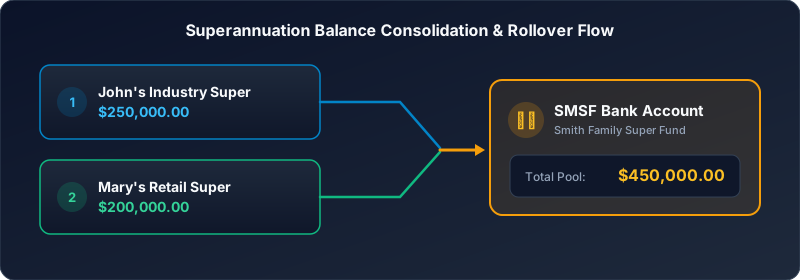
Once the bank account and ESA are active, members initiate electronic rollovers from their existing super funds.
Check Existing Insurance First: Before closing existing super accounts, check whether you hold valuable Life, Total and Permanent Disability (TPD), or Income Protection cover. Closing an existing super account cancels underlying policies. Consider leaving a modest balance to maintain cover if required.
#10. Step 6: Work Out the Property Budget & Victorian Costs
If your SMSF has $450,000 in cash, you cannot commit the full $450,000 to the property purchase. The fund must retain an adequate cash buffer and fund Victorian property acquisition costs:
| Cost Item | Description | Estimated Impact |
|---|---|---|
| Victorian Land Transfer Duty (Stamp Duty) | SRO Victoria statutory duty | ~5.5% of purchase price |
| Conveyancing & Legal Fees | Victorian contract review & settlement | $1,800 – $3,500 |
| LRBA Legal Setup & Holding Trust | Bare trust documentation & deeds | $1,500 – $3,000 |
| Lender Application & Valuation Fees | SMSF loan setup | $1,000 – $2,500 |
| Building & Pest Inspection | Pre-purchase due diligence | $500 – $900 |
| SMSF Cash Liquidity Reserve | 6–12 months of mortgage & maintenance buffer | $15,000 – $30,000 |
#11. Step 7: Cash Purchase vs. SMSF Borrowing (LRBA)
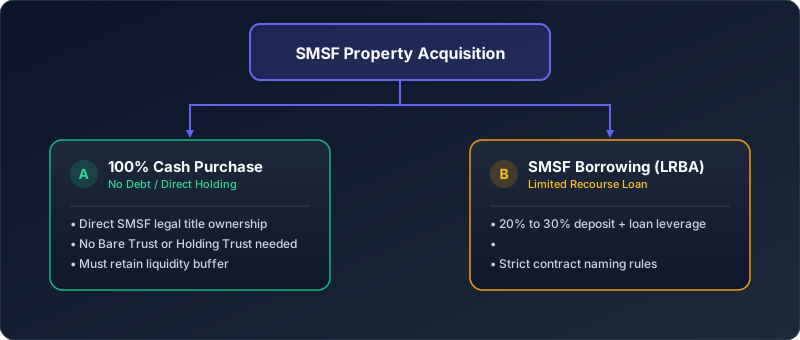
An SMSF can acquire property in two ways:
- 100% Cash Purchase: Structurally simpler with no lender involvement, provided the fund retains sufficient liquid reserves.
- SMSF Borrowing (LRBA): When the fund leverages a deposit (typically 20% to 30% plus costs) and borrows the balance from an approved SMSF lender.
#12. What Is an LRBA and How Does It Work?
Under the Superannuation Industry (Supervision) Act 1993, SMSFs are generally prohibited from borrowing money, with one specific exception: Limited Recourse Borrowing Arrangements (LRBA).
In an LRBA:
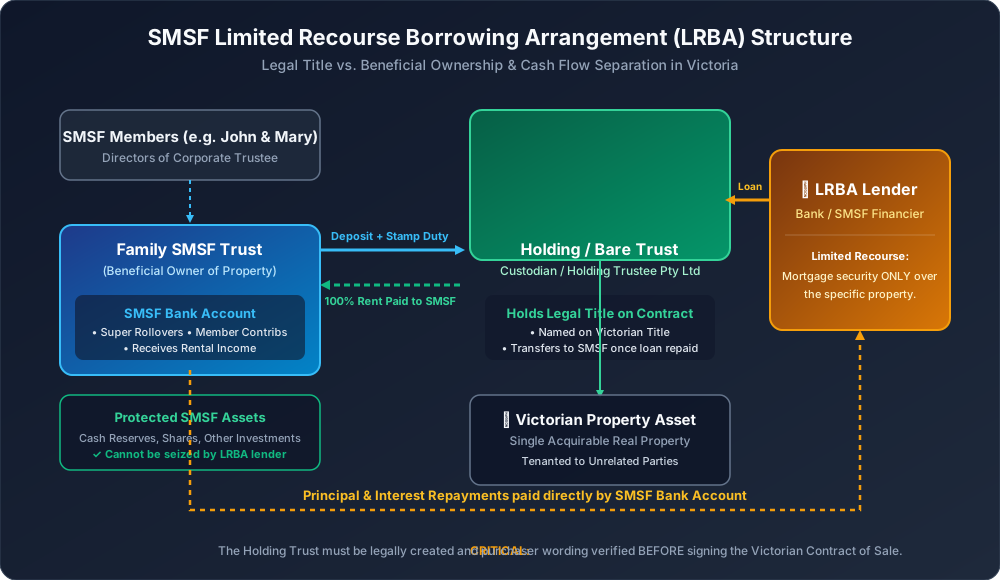
- A separate Holding Trust (Bare Trust) is created with its own Holding Trustee.
- The Holding Trustee holds the legal title to the property until the loan is fully repaid.
- The SMSF holds the beneficial ownership and receives all rental income and capital appreciation.
- Once the loan is paid off in full, the legal title is transferred from the Holding Trustee to the SMSF without incurring secondary Victorian stamp duty (provided it was structured correctly from day one).
#13. Why Is It Called "Limited Recourse"?
The term limited recourse means that if the SMSF defaults on loan repayments, the lender's recovery rights are legally confined to the specific property securing the loan.
The lender cannot seize other assets owned by the SMSF (such as cash balances, term deposits, or share portfolios).
Most SMSF lenders require personal guarantees from the fund directors. While the lender cannot touch other SMSF assets, personal assets outside the SMSF could be exposed under a personal guarantee in the event of a catastrophic loan default.
#14. Critical Warning: Do Not Sign Contracts Personally
This is the number one mistake made by inexperienced property investors:
NEVER sign a Contract of Sale in your personal name with the intention of "transferring it to the SMSF later".
Doing so can trigger double stamp duty in Victoria (paying transfer duty twice) and will cause lenders to reject the LRBA loan outright. The Holding Trust entity must be established and named correctly as the purchaser prior to executing the contract.
#15. Who Is Named on the Victorian Contract of Sale?
When using an LRBA in Victoria, the purchaser named on the contract is typically:
[Holding Trustee Pty Ltd] ACN [XXX XXX XXX]
as trustee for the [Property Address] Holding Trust
Your conveyancer and SMSF lawyer must review and confirm the exact wording before signing.
#16. Residential Property: Compliance & Sole Purpose Matrix
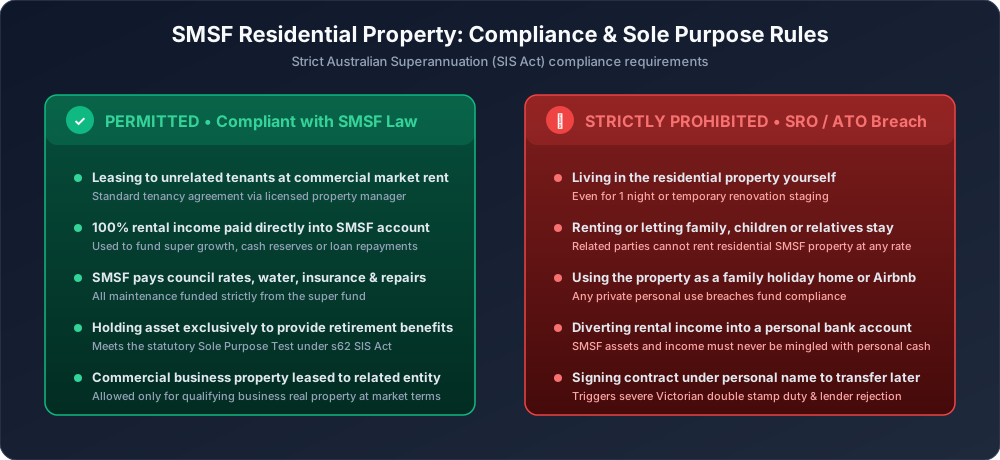
Understanding what is strictly allowed and what breaches superannuation law is critical for all trustees:
| Permitted (Compliant) | Strictly Prohibited (Breach) |
|---|---|
| Renting to unrelated tenants at market rates | Living in the property yourself (even for one day) |
| Rent deposited 100% into SMSF account | Letting your children or relatives live there or rent it |
| SMSF pays rates, water, insurances & repairs | Using the property as a family holiday home or weekend getaway |
| Holding the asset for long-term retirement benefits | Diverting rental proceeds to personal spending accounts |
| Engaging a licensed property manager | Undertaking major property improvements using borrowed money |
#17. Victorian Taxes: Land Tax and Stamp Duty
When purchasing in Victoria, SMSF trustees must budget for:
- Victorian Land Transfer Duty: Payable on settlement to the State Revenue Office (SRO).
- Victorian Land Tax: In Victoria, land held under trust structures is subject to general and trust surcharge thresholds. Verify with your tax adviser whether your SMSF trust qualifies for concessional or general threshold treatment under SRO guidelines.
- Council Rates & Owners Corporation Fees: Must always be paid from fund cash reserves.
#18. Complete Practical Scenario
Consider John ($250,000 super) and Mary ($200,000 super):
- Total Fund Balance: $450,000 in Smith Family Super Fund.
- Target Property: $650,000 Victorian residential apartment.
- SMSF 30% Deposit: $195,000
- Victorian Stamp Duty & Acquisition Costs: ~$40,000
- LRBA Loan Amount (70% LVR): $455,000
- Remaining SMSF Cash Buffer: $215,000 retained in high-yield cash for liquidity and risk management.
- Cash Flow: Tenant pays $650/week ($33,800/year) directly into SMSF. SMSF pays loan interest and expenses, accumulating surplus earnings at the 15% super tax rate.
#19. Common Pitfalls to Avoid
- ❌ Mistake 1: Signing a purchase contract before the SMSF and Bare Trust deeds are executed.
- ❌ Mistake 2: Entering your personal name on the contract with "and/or nominee".
- ❌ Mistake 3: Rolling over 100% of super without checking existing life and TPD insurance coverage.
- ❌ Mistake 4: Depleting all fund cash for the deposit, leaving zero liquidity for vacancies or urgent repairs.
- ❌ Mistake 5: Attempting substantial structural renovations (redeveloping or subdividing) while an LRBA loan is in place (LRBA rules prohibit fundamentally changing the nature of the asset while under loan).
- ❌ Mistake 6: Mingling personal bank accounts with fund accounts.
#20. Professional Advisory Team
Executing an SMSF property purchase safely involves coordinated specialist advice:
| Professional | Key Responsibility |
|---|---|
| SMSF Specialist Accountant | Fund establishment, annual financial statements, tax returns |
| Independent SMSF Auditor | Mandatory annual compliance and financial audit |
| SMSF Mortgage Broker / Lender | LRBA loan structuring, borrowing capacity & pre-approval |
| SMSF Lawyer / Conveyancer | Bare Trust deeds, contract review & Victorian SRO compliance |
| Licensed Financial Adviser (AFSL) | Strategy validation & Statement of Advice (SoA) |
#21. Summary: The Golden Flow
The simplest way to remember the end-to-end SMSF property journey is:
1. Set Up ➔ 2. Fund ➔ 3. Finance ➔ 4. Buy ➔ 5. Rent ➔ 6. Manage ➔ 7. Retire
#Official Regulatory Resources
- Australian Taxation Office (ATO): Self-Managed Super Funds & Property Investing
- ASIC Moneysmart: SMSFs and Property Investing Guidelines
- State Revenue Office Victoria (SRO): Land Transfer Duty and Land Tax Calculator
Last updated: September 2026.
Disclaimer: This article is general educational information only and does not take into account your individual objectives, financial situation, or needs. It should not be relied upon as financial, legal, taxation, or credit advice.